No Result
View All Result
  • 로그인
No Result
View All Result
서울대학교 행복연구센터
No Result
View All Result

Karniol, R. (2003). Egocentrism versus protocentrism: The status of self in social prediction. Psychological Review, 110(3), 564-580.

서울대학교 행복연구센터 by 서울대학교 행복연구센터
5월 10, 2021
in 연구논문, 행복DB
0
Share on Facebook

In this article, the author discusses the limitations of the egocentric view of self in which self serves as an automatic filter, inhibiting access to alternative representations of others’ thoughts and feelings. The author then outlines a protocentric model, the self-as-distinct (SAD) model, in which generic representations of prototypic others serve as the default; representations of self, specific others, or categories encode only distinctiveness from generic knowledge about prototypic others. Thus, self-knowledge is distributed both in generic representations in which self and prototypic others are undifferentiated and in a self-representation that encodes distinctiveness. The self-representation does not serve to make predictions about others because it encodes how self differs from the generic representation of others. Predictions that are the same about self and others are protocentric, based on generic knowledge that serves as the default. The SAD model parsimoniously accounts for many inconsistent findings across various domains in social cognition.


Karniol, R. (2003). Egocentrism versus protocentrism: The status of self in social prediction. Psychological Review, 110(3), 564-580.

http://dx.doi.org/10.1037/0033-295X.110.3.564


Tags: Egocentrism
Previous Post

Johnson, J. T. (1987). The heart on the sleeve and the secret self: Estimations of hidden emotion in self and acquaintances. Journal of Personality, 55(4), 563-582.

Next Post

니코마코스 윤리학

Related Posts

[연구참여자 모집/사례 지급] 자유연상 패턴과 심리적 속성 간의 관계 탐색
연구논문

[연구참여자 모집/사례 지급] 자유연상 패턴과 심리적 속성 간의 관계 탐색

5월 21, 2024
968
Vol.92 몸으로 마음을 움직이는 법
미디어

Vol.92 몸으로 마음을 움직이는 법

2월 29, 2024
667
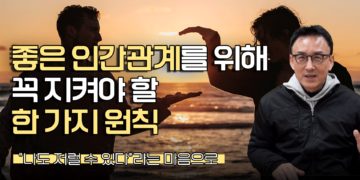
좋은 인간관계를 위해 꼭 지켜야 할 한 가지 원칙
미디어

좋은 인간관계를 위해 꼭 지켜야 할 한 가지 원칙

1월 9, 2024
1k
Next Post

니코마코스 윤리학

  • 01-행복연구센터
  • 01-행복연구센터-교육사업
  • 01-행복연구센터-문화컨텐츠사업
  • 01-행복연구센터-센터소개
  • 01-행복연구센터-연구사업
  • 02-행복DB
  • 02-행복DB-도서
  • 02-행복DB-명언
  • 02-행복DB-미디어
  • 02-행복DB-보고서
  • 02-행복DB-언론자료
  • 02-행복DB-연구논문
  • 02-행복DB-웹사이트
  • 02-행복DB-행복연구센터발간자료
  • 03-행복스토리
  • 03-행복스토리-보고서스케치
  • 03-행복스토리-북챕터스케치
  • 03-행복스토리-연구스케치
  • 03-행복스토리-오피니언
  • 03-행복스토리-카드뉴스
  • 03-행복스토리-행복교육연구스케치
  • 04-뉴스레터
  • 05-행복교육
  • 05-행복교육-행복교과서
  • 05-행복교육-행복교과서 챕터가이드
  • 05-행복교육-행복교육워크숍
  • H드라이브
  • 개인정보 취급방침
  • 메인화면
  • 에디터
  • 이용약관
  • 카드뉴스
  • 페이스북
  • 행복연구센터
  • 회원가입
  • 💌 서울대학교 행복연구센터 뉴스레터가 새롭게 찾아옵니다.
서울대학교 행복연구센터

이용약관| 개인정보 취급방침
08826 서울특별시 관악구 관악로 1 서울대학교 220동 643호 TEL: 02-880-6391 FAX: 02-877-6391 Email: happiness@snu.ac.kr
Copyright@2016 Center for Happiness Studies. All rights reserved.

Welcome Back!

Login to your account below

비밀번호 찾기

Retrieve your password

Please enter your username or email address to reset your password.

Log In
No Result
View All Result
  • 01-행복연구센터
  • 01-행복연구센터-교육사업
  • 01-행복연구센터-문화컨텐츠사업
  • 01-행복연구센터-센터소개
  • 01-행복연구센터-연구사업
  • 02-행복DB
  • 02-행복DB-도서
  • 02-행복DB-명언
  • 02-행복DB-미디어
  • 02-행복DB-보고서
  • 02-행복DB-언론자료
  • 02-행복DB-연구논문
  • 02-행복DB-웹사이트
  • 02-행복DB-행복연구센터발간자료
  • 03-행복스토리
  • 03-행복스토리-보고서스케치
  • 03-행복스토리-북챕터스케치
  • 03-행복스토리-연구스케치
  • 03-행복스토리-오피니언
  • 03-행복스토리-카드뉴스
  • 03-행복스토리-행복교육연구스케치
  • 04-뉴스레터
  • 05-행복교육
  • 05-행복교육-행복교과서
  • 05-행복교육-행복교과서 챕터가이드
  • 05-행복교육-행복교육워크숍
  • H드라이브
  • 개인정보 취급방침
  • 메인화면
  • 에디터
  • 이용약관
  • 카드뉴스
  • 페이스북
  • 행복연구센터
  • 회원가입
  • 💌 서울대학교 행복연구센터 뉴스레터가 새롭게 찾아옵니다.
  • 로그인

이용약관| 개인정보 취급방침
08826 서울특별시 관악구 관악로 1 서울대학교 220동 643호 TEL: 02-880-6391 FAX: 02-877-6391 Email: happiness@snu.ac.kr
Copyright@2016 Center for Happiness Studies. All rights reserved.